Oregon PDF Docs

Oregon PDF Docs

Homepage ➼ Free Oregon Snap Change Report Form

Free Oregon Snap Change Report Form

Make My Document Online
Content Overview

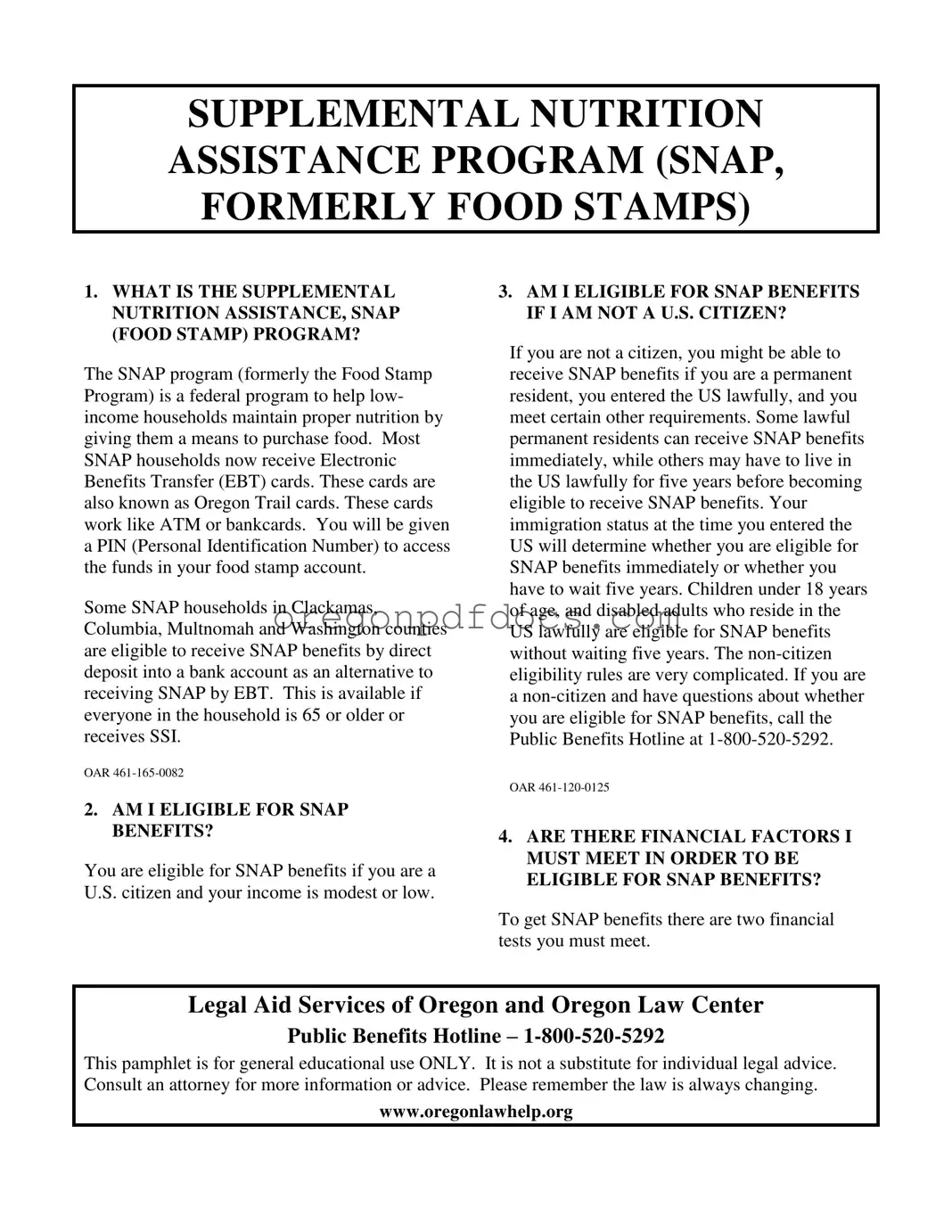
The Oregon SNAP Change Report form is an essential document for individuals and families participating in the Supplemental Nutrition Assistance Program (SNAP), previously known as food stamps. This program is designed to assist low-income households in purchasing food and maintaining proper nutrition. Eligible participants receive benefits primarily through Electronic Benefits Transfer (EBT) cards, commonly referred to as Oregon Trail cards, which function similarly to debit cards. The form serves multiple purposes, including reporting significant changes in a household's circumstances, such as income fluctuations, changes in household composition, or alterations in living expenses. It is crucial for beneficiaries to understand their eligibility criteria, which include resource and income tests, as well as specific rules governing non-citizen eligibility. Additionally, the form outlines the process for applying for benefits, the types of deductions that can be claimed to increase benefit amounts, and the necessary steps to take if a participant's application is denied or if they disagree with their benefit allotment. By keeping track of these changes and reporting them accurately, participants can ensure they receive the correct level of assistance to support their nutritional needs.

Similar forms

  • Welfare Change Report Form: Similar to the Oregon SNAP Change Report, this form is used to report changes in circumstances that may affect eligibility for welfare benefits. Both documents require individuals to provide updated information about income, household composition, and other relevant factors.
  • Medicaid Change Report Form: This form is used to inform Medicaid of any changes in a beneficiary's situation. Like the SNAP Change Report, it focuses on ensuring that the information on file is current to determine ongoing eligibility for benefits.
  • TANF Change Report Form: The Temporary Assistance for Needy Families (TANF) Change Report serves a similar purpose. It allows recipients to report changes that could impact their financial assistance, mirroring the requirements of the SNAP Change Report.
  • Alabama Bill of Sale Form: For those looking to complete vehicle transactions, refer to our comprehensive Alabama ATV Bill of Sale form for proper documentation and legal compliance.
  • Housing Assistance Change Report: This document is used by individuals receiving housing assistance to report changes in income or family size. Both forms aim to keep assistance levels appropriate based on the current circumstances of the household.
  • Child Care Assistance Change Report: Families receiving child care assistance must report changes that may affect their eligibility. This form, like the SNAP Change Report, ensures that benefits are adjusted according to the latest household information.
  • Unemployment Benefits Change Report: This form is used by individuals receiving unemployment benefits to report changes in their job status or income. Both documents require timely updates to maintain eligibility and ensure that benefits reflect the current situation.

Key takeaways

  • Understand the Purpose: The Oregon SNAP Change Report form is designed to help low-income households maintain proper nutrition by reporting changes that may affect their benefits.
  • Eligibility Criteria: To qualify for SNAP benefits, you must be a U.S. citizen or meet specific criteria as a non-citizen, such as being a lawful permanent resident.
  • Financial Tests: Two main financial tests must be met: a resource test, which limits total resources to $2,000 per household, and an income test based on your household size and income.
  • Benefit Calculation: SNAP benefits depend on household size, income, and allowable deductions, such as childcare costs and medical expenses.
  • Application Process: Applying for SNAP involves contacting the local Department of Human Services (DHS) and submitting necessary documents, including proof of income and citizenship.
  • Reporting Changes: Certain changes must be reported immediately, while others can wait until the sixth month of your SNAP grant. It's essential to know what changes to report to maintain eligibility.
  • Right to Appeal: If your application for SNAP benefits is denied, you have the right to request a hearing within 90 days of receiving the denial notice.
  • EBT Card Usage: Once eligible, you will receive an EBT (Oregon Trail) card to access your benefits. Keep track of your balance and use it like a debit card for eligible food purchases.
  • Seek Assistance: If you encounter issues with your EBT card or have questions about your benefits, contact the appropriate hotline for help.

File Details

Fact Name Details
Program Overview The Supplemental Nutrition Assistance Program (SNAP) is a federal initiative designed to assist low-income households in purchasing food. Participants typically receive benefits through Electronic Benefits Transfer (EBT) cards, also known as Oregon Trail cards.
Eligibility Criteria To qualify for SNAP benefits, individuals must be U.S. citizens with low to modest income. Non-citizens may also qualify under specific conditions.
Non-Citizen Eligibility Permanent residents may receive benefits if they meet certain requirements. Children under 18 and disabled adults can qualify without the five-year residency requirement.
Financial Requirements Eligibility involves passing two financial tests: a resource test (not exceeding $2,000 or $3,250 for eligible individuals) and an income test based on countable and adjusted income.
Benefit Calculation The amount of SNAP benefits received is determined by household size and income, with various deductions available to increase benefits.
Application Process Individuals can apply through the Department of Human Services (DHS). An interview is required, and expedited benefits are available under certain circumstances.
Denial of Benefits If an application is denied, the applicant receives a notice explaining the reasons and has 90 days to request a hearing for reconsideration.
EBT Card Functionality The EBT card allows recipients to access their benefits at grocery stores. Users enter a Personal Identification Number (PIN) to complete transactions.
Reporting Changes Recipients must report certain changes to DHS, including income fluctuations and changes in expenses, to ensure accurate benefit levels.

Documents used along the form

The Oregon SNAP Change Report form is a crucial document for individuals and families who receive Supplemental Nutrition Assistance Program benefits. It allows recipients to report changes in their circumstances that may affect their eligibility or benefit amounts. Along with this form, there are several other documents that are commonly used in conjunction with the SNAP program. Here’s a brief overview of these forms and documents.

  • DHS Form 443 (Administrative Hearing Request): This form is used to request a hearing if an individual's application for SNAP benefits is denied. It provides a formal way to appeal the decision made by the Division.
  • Non-disclosure Agreement form: A Georgia Non-disclosure Agreement (NDA) is a legal document that protects sensitive information shared between parties, ensuring that confidential details remain private and fostering trust in business relationships. For more details, visit Forms Georgia.
  • DHS Form 221 (SNAP Benefits Computation): This document shows how SNAP benefits were calculated. It outlines the deductions and income considered when determining the benefit amount, allowing recipients to verify accuracy.
  • Interim Change Report: This form is necessary for reporting certain changes during the SNAP grant period. It helps ensure that the benefits reflect the recipient's current financial situation.
  • Proof of Income Documentation: This includes pay stubs, tax returns, or other records that verify the household's income. It is essential for determining eligibility and benefit levels.
  • Proof of Residency: Documents such as utility bills or rental agreements can serve as proof of where a person lives. This is often required to establish eligibility for SNAP benefits.
  • Proof of Citizenship or Immigration Status: Non-citizens may need to provide documentation to verify their eligibility for SNAP benefits. This could include green cards or other immigration documents.

Each of these documents plays an important role in the SNAP application and benefits process. Understanding their purpose can help recipients navigate the system more effectively and ensure they receive the assistance they need.